
INSIGHTS
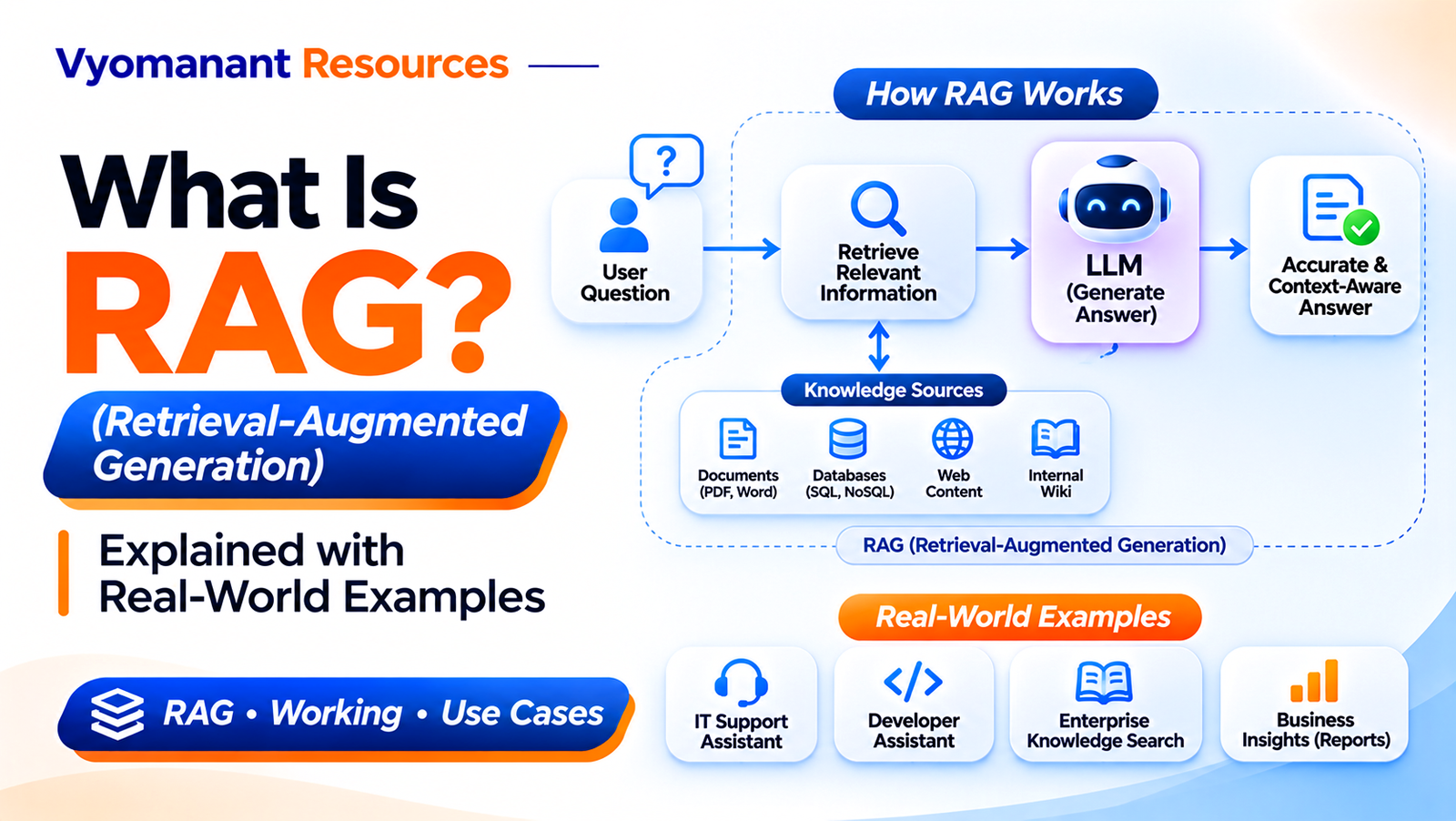
What Is RAG? Explained with Real-World Examples
Learn what Retrieval-Augmented Generation (RAG) is, how it works, and why it is important for AI applications. Understand RAG architecture, embeddings, vector databases, and real-world use cases through simple explanations and practical examples.
Engineering support
Need help applying this?
Discuss your engineering requirements with Vyomanant Technologies.
Talk to UsOn this page
What Is RAG? Explained with Real-World Examples
Imagine asking an AI chatbot:
"What is my company's latest work-from-home policy?"
A general AI model may not know the answer because it doesn't automatically have access to your company's internal documents.
But what if the AI could search the relevant company documents, find the correct information, and use it to answer your question?
That's exactly what Retrieval-Augmented Generation (RAG) is designed to do.
Let's understand RAG, how it works, its architecture, and real-world applications with simple examples.
1. What Is RAG?
RAG (Retrieval-Augmented Generation) is an AI technique that combines information retrieval with text generation to produce answers using relevant external knowledge.
Instead of relying only on information learned during training, a RAG system retrieves relevant content from connected knowledge sources and provides it to a language model.
The model then uses that information to generate an answer.
Simple Example
Imagine you ask:
"How many paid leaves does my company provide?"
Without RAG:
A general AI chatbot may not know your company's policy. It might provide a generic answer or make an incorrect assumption.
With RAG:
The AI application can:
- Search the company's HR policy documents.
- Find the section about paid leave.
- Retrieve the relevant information.
- Generate an answer based on that document.
Example Answer:
"According to the company's HR policy, employees receive 20 paid leave days annually."
This answer is valid only if the retrieved policy actually states that number.
Key Point: RAG helps AI applications answer questions using relevant information from external knowledge sources.
2. Why Do We Need RAG?
Large Language Models (LLMs) are trained on large amounts of data, but they have limitations.
For example:
- They may not know recent information.
- They cannot automatically access private company documents.
- They may generate incorrect or unsupported answers.
- They may lack information about specialized business processes.
RAG helps address these limitations by retrieving relevant information when needed.
Simple Analogy
Think of an LLM as a student taking an exam.
Without RAG: The student answers questions using only what they remember.
With RAG: The student can consult a reference book before answering.
The student still needs to understand the information, but the reference material helps them provide a more informed answer.
In Simple Terms: RAG gives an AI model relevant reference material before it generates a response.
3. How Does RAG Work?
A typical RAG system follows this process:
User Question → Search Relevant Information → Retrieve Context → Generate Answer
Let's take an example.
Question: "What is our application's deployment process?"
Step 1: User Asks a Question
The user submits a question through an AI application.
Step 2: Search the Knowledge Base
The system searches relevant documents, such as deployment guides, internal documentation, or technical runbooks.
Step 3: Retrieve Relevant Information
The system identifies and retrieves the sections most relevant to the question.
Step 4: Provide Context to the LLM
The retrieved information is included in the model's input.
Step 5: Generate the Answer
The LLM uses the retrieved context to explain the deployment process.
Result: The user receives an answer grounded in the organization's available documentation.
Important: RAG improves access to relevant information, but it does not guarantee accuracy. The quality of the answer depends on the retrieved content and how the model uses it.
4. RAG Architecture
RAG commonly has two major workflows:
- Indexing: Preparing documents so they can be searched.
- Retrieval and Generation: Finding relevant content and generating answers.
Basic RAG Architecture
        DOCUMENT PREPARATION

      Company Documents
      PDFs / Websites / FAQs
               |
               v
        Extract Text
               |
               v
       Split into Chunks
               |
               v
       Generate Embeddings
               |
               v
        Vector Database


         QUESTION ANSWERING

          User Question
               |
               v
       Generate Query
          Embedding
               |
               v
        Search Vector
           Database
               |
               v
       Retrieve Relevant
            Chunks
               |
               v
      Question + Context
               |
               v
              LLM
               |
               v
        Generated Answer
How It Works:
First, documents are processed and stored in a searchable format.
When a user asks a question, the system searches for relevant content.
That content is provided to the LLM, which generates an answer.
Note: This diagram represents a common vector-based RAG architecture. Other implementations may use keyword search, hybrid search, reranking, or different retrieval methods.
5. Key Components of RAG
1. Knowledge Sources — The Information
Knowledge sources contain the information the AI application needs.
Examples include:
- PDF documents.
- Company policies.
- Product documentation.
- Websites and FAQs.
- Technical runbooks.
- Knowledge bases.
Example: A company's HR handbook contains employee leave policies.
Purpose: Provide external information for answering questions.
2. Document Chunking — Breaking Information into Smaller Parts
Large documents are often divided into smaller sections called chunks.
This makes it easier to retrieve specific information without passing an entire document to the LLM.
Example:
A 100-page employee handbook may be divided into chunks covering leave policies, payroll, attendance, and benefits.
Purpose: Improve information retrieval and manage context size.
3. Embeddings — Converting Meaning into Numbers
Embeddings are numerical representations of text that help systems compare semantic similarity.
For example, these questions have similar meanings:
- "How many vacation days do employees get?"
- "What is the annual paid leave allowance?"
An embedding model can represent these questions in ways that help a search system identify their similarity.
Purpose: Help find information based on meaning rather than exact keyword matches.
4. Vector Database — Storing and Searching Embeddings
A vector database stores and searches vector representations of information.
Common technologies include:
- Pinecone
- Weaviate
- Milvus
- PostgreSQL with pgvector
- Chroma
Example:
When a user asks about annual leave, the system searches stored embeddings to find related HR policy sections.
Purpose: Retrieve semantically relevant information efficiently.
Important: A vector database is common in RAG, but it is not mandatory. RAG can also use traditional search engines or hybrid retrieval systems.
5. Retriever — Finding Relevant Content
The retriever searches the knowledge base and selects information related to the user's question.
Example:
A user asks:
"How do I deploy the application to production?"
The retriever finds relevant deployment instructions rather than unrelated documents.
Purpose: Select useful context for the LLM.
6. Large Language Model — Generating the Answer
The LLM receives the user question and retrieved information.
It then generates a response using that context.
Example:
The retrieved documentation describes a deployment process using GitHub Actions and Kubernetes.
The LLM summarizes those steps in simple language.
Purpose: Convert retrieved information into a clear, useful answer.
6. Real-World Examples of RAG
Example 1: Company HR Chatbot
Scenario: Employees frequently ask questions about leave policies, payroll, and benefits.
A RAG-powered chatbot can:
- Search approved HR documents.
- Retrieve relevant policy sections.
- Answer employee questions.
- Provide references to the original documents.
Benefit: Faster access to company policies and reduced repetitive HR queries.
Example 2: Technical Documentation Assistant
Scenario: A developer wants to understand how an internal application works.
A RAG system can search:
- Architecture documents.
- API documentation.
- Configuration guides.
- Troubleshooting runbooks.
Example Question:
"How does our application connect to the database?"
The AI retrieves the relevant architecture documentation and explains the connection.
Benefit: Developers spend less time manually searching technical documents.
Example 3: DevOps Troubleshooting Assistant
Scenario: A Kubernetes application is failing.
A RAG assistant can retrieve relevant troubleshooting guides and known incident reports.
Example Question:
"What should I check when a Pod enters CrashLoopBackOff?"
The system retrieves troubleshooting documentation and generates a structured explanation.
Benefit: Faster access to known solutions and operational knowledge.
Note: RAG retrieves information. It does not automatically execute Kubernetes commands or fix the issue.
Example 4: Customer Support Chatbot
Scenario: Customers ask questions about product features, subscriptions, and troubleshooting.
A RAG chatbot can:
- Search product documentation.
- Retrieve relevant support articles.
- Generate answers.
- Reference supporting documentation.
Benefit: More consistent answers based on maintained product information.
Example 5: E-Commerce Product Assistant
Scenario: A customer asks:
"Which laptop supports 32 GB RAM and has a 14-inch display?"
A RAG system connected to a maintained product catalog can retrieve matching specifications and help explain suitable options.
Benefit: Product recommendations based on available catalog information rather than unsupported guesses.
7. RAG vs Fine-Tuning
RAG and fine-tuning are two different approaches to improving AI applications.
| RAG | Fine-Tuning |
|---|---|
| Retrieves external information at query time | Updates model parameters through additional training |
| Useful for changing knowledge | Useful for adapting model behavior or specialized tasks |
| Documents can be updated without retraining | Model updates require a training process |
| Can provide source references | Does not inherently provide source references |
| Requires a retrieval system | Requires training data and suitable training infrastructure |
Simple Example
RAG: An HR chatbot searches the latest employee policy before answering.
Fine-Tuning: A model is trained on examples to follow a particular response format or perform a specialized task.
Key Point: Use RAG when your application needs access to external knowledge. Consider fine-tuning when you need to adapt model behavior or task performance.
Both approaches can also be combined.
8. RAG vs Agentic AI
RAG and Agentic AI are related but serve different purposes.
RAG: Retrieves relevant information to support an AI-generated answer.
Agentic AI: Plans and performs actions to achieve a goal.
Simple Example
RAG Assistant:
"Here are the steps to troubleshoot your failed deployment, based on your team's runbook."
AI Agent:
"I checked the deployment logs, identified a configuration issue, and prepared a fix for your review."
An AI agent may also use RAG to retrieve documentation before deciding what action to take.
Remember: RAG helps AI access knowledge. Agentic AI helps AI perform tasks.
9. Benefits of RAG
More Relevant Answers
RAG provides the LLM with information related to the user's question.
Access to Updated Information
Knowledge sources can be updated without retraining the entire language model.
Support for Private Knowledge
Organizations can connect AI applications to authorized internal documentation.
Better Transparency
Applications can include references to retrieved documents so users can verify answers.
Reduced Unsupported Answers
Relevant context can reduce some hallucinations, although incorrect answers remain possible.
10. Challenges of RAG
RAG also has limitations.
- Poor Retrieval: The system may retrieve irrelevant documents.
- Outdated Information: Old documents can produce outdated answers.
- Chunking Problems: Important context may be split across chunks.
- Security: Users must not retrieve documents they are unauthorized to access.
- Incorrect Generation: The LLM may misunderstand or misrepresent retrieved information.
- Performance: Retrieval and generation introduce latency and infrastructure costs.
Best Practice: Use trusted knowledge sources, enforce access permissions, evaluate retrieval quality, and include citations where possible.
11. When Should You Use RAG?
RAG is particularly useful when an AI application needs to answer questions based on:
- Internal company documents.
- Frequently updated information.
- Technical documentation.
- Product knowledge bases.
- Organizational policies.
- Specialized domain information.
For example, if you're building an AI assistant that answers questions about your company's infrastructure, RAG can retrieve relevant runbooks and architecture documents.
However, if the application only needs general conversation or simple text generation, a retrieval system may not be necessary.
12. Final Thoughts
Retrieval-Augmented Generation (RAG) helps AI applications generate answers using relevant information retrieved from external knowledge sources.
It combines document processing, information retrieval, and Large Language Models to deliver more context-aware responses.
From HR chatbots and customer support to DevOps documentation assistants, RAG has many practical applications.
Key Takeaway: RAG allows AI to look up relevant information before answering, rather than relying only on what the model already knows.
CONTINUE EXPLORING
Recommended next
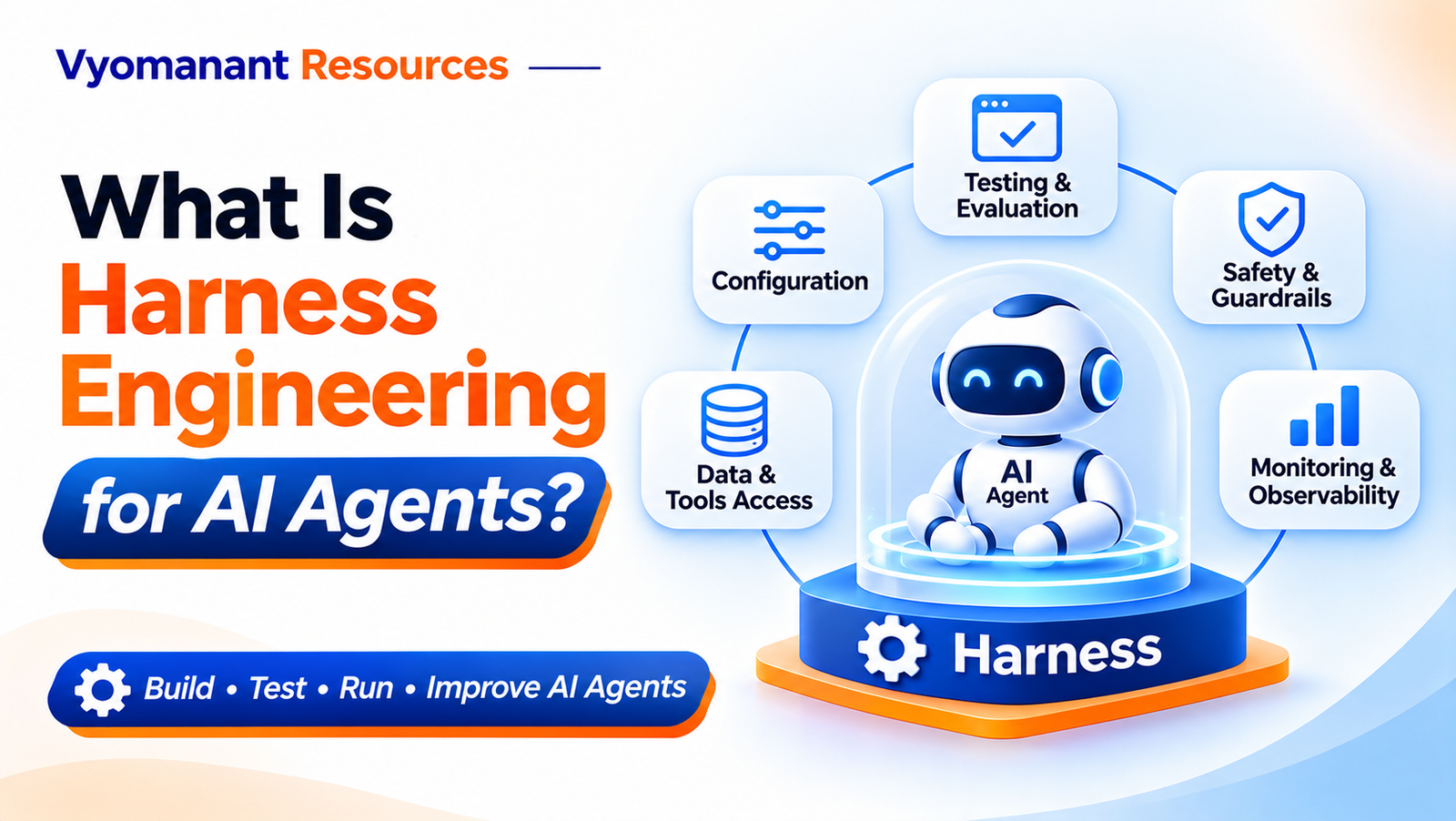
What Is Harness Engineering for AI Agents?
Learn what Harness Engineering is, why AI agents need it, and how it improves reliability, security, and automation. Explore agent harness architecture, key components, and real-world software development examples in simple, beginner-friendly language.
Read insight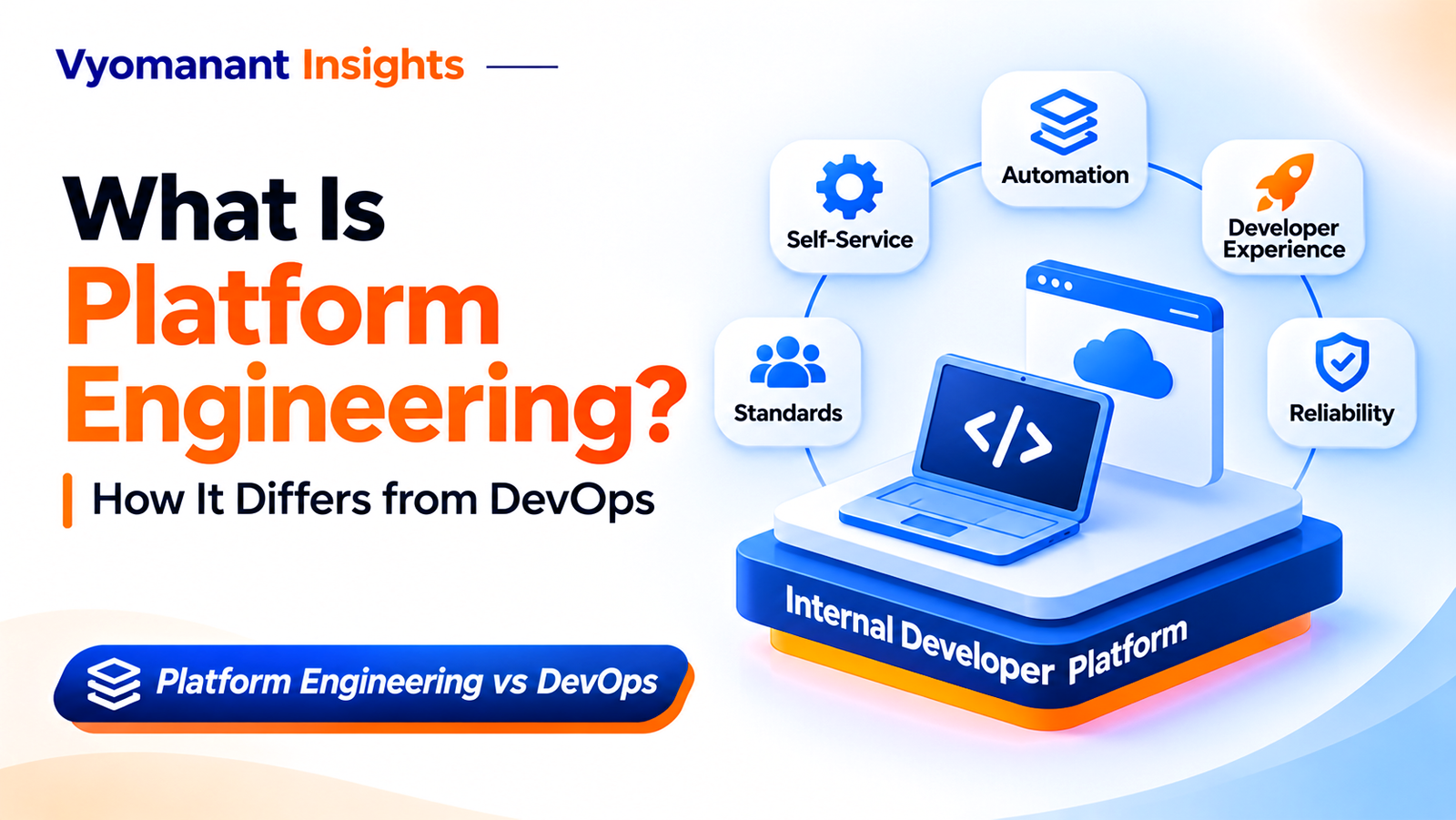
What Is Platform Engineering? How It Differs from DevOps
Learn what Platform Engineering is, how it works, and how it differs from DevOps. Explore Internal Developer Platforms (IDPs), self-service infrastructure, real-world examples, benefits, and the roles of platform engineers.
Read insight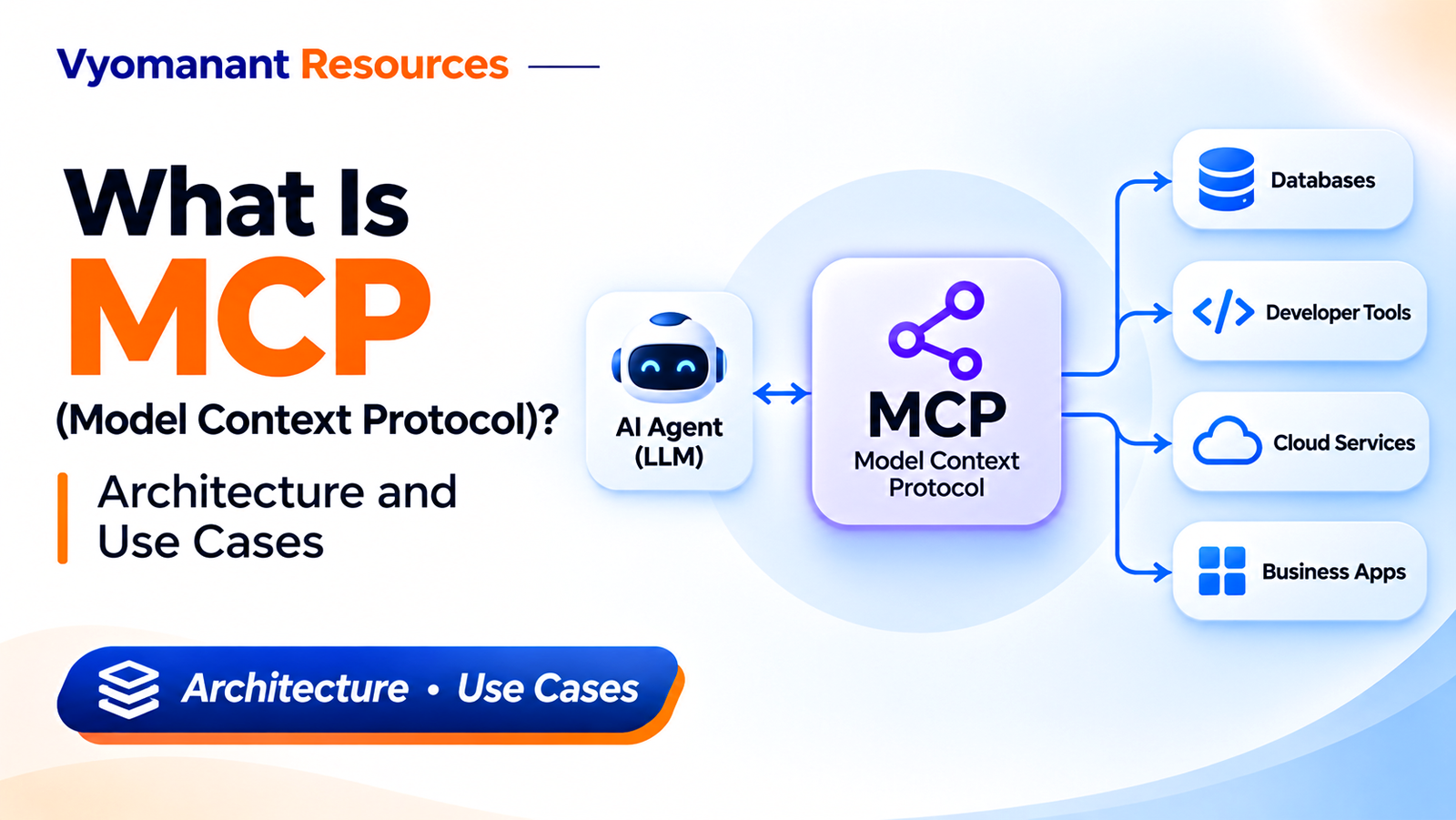
What Is MCP (Model Context Protocol)? Architecture & Use cases
Learn what Model Context Protocol (MCP) is, how its architecture works, and how it connects AI applications with external tools and data. Explore MCP clients, servers, tools, resources, and real-world examples in simple, beginner-friendly language.
Read insight