
INSIGHTS
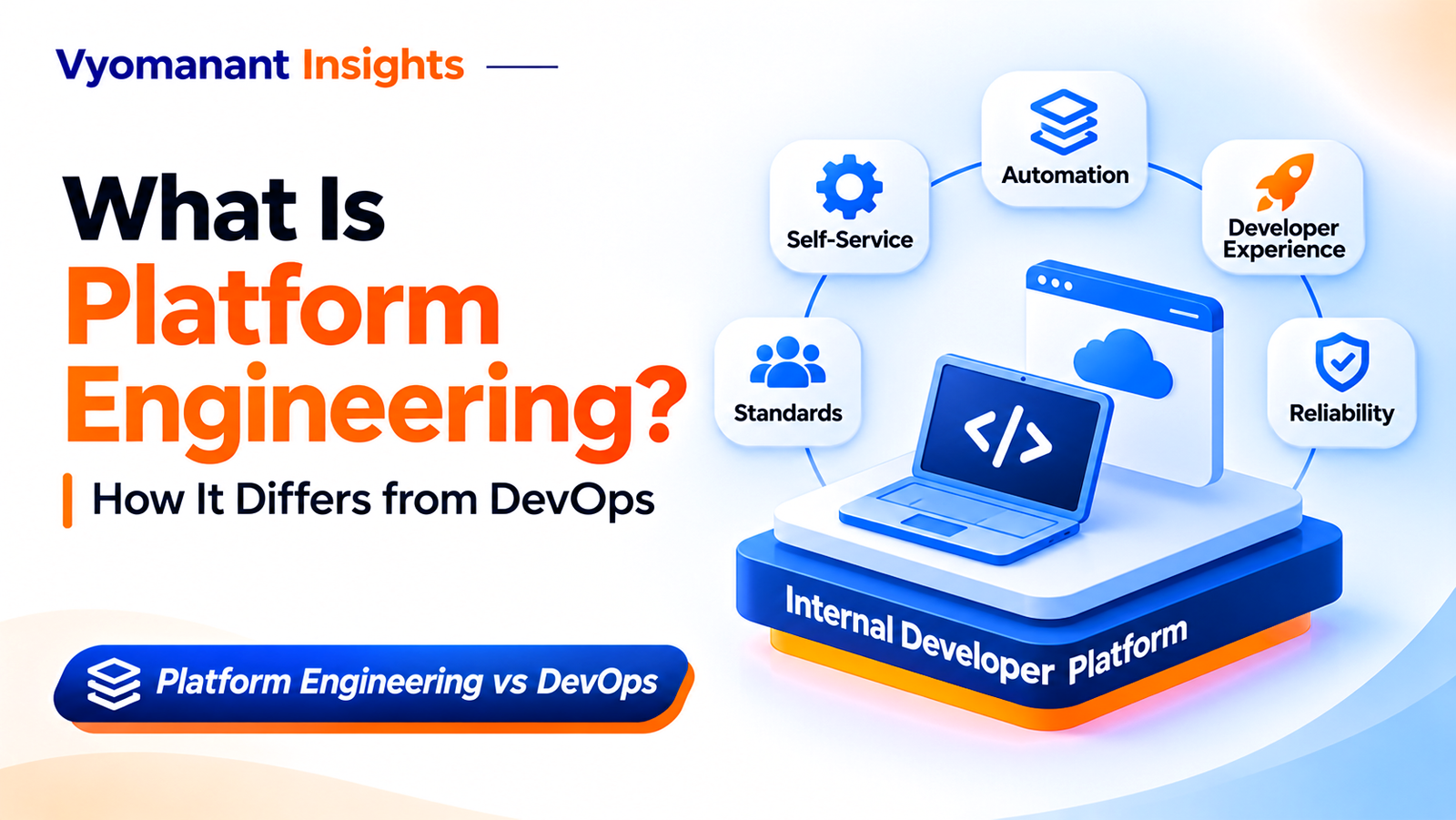
What Is Platform Engineering? How It Differs from DevOps
Learn what Platform Engineering is, how it works, and how it differs from DevOps. Explore Internal Developer Platforms (IDPs), self-service infrastructure, real-world examples, benefits, and the roles of platform engineers.
Engineering support
Need help applying this?
Discuss your engineering requirements with Vyomanant Technologies.
Talk to UsOn this page
Imagine you're a developer who wants to deploy an application.
You need a server, a database, a CI/CD pipeline, monitoring, and security configurations.
Traditionally, you might need to contact the DevOps or infrastructure team for help with several of these tasks.
What if you could get everything you need through a self-service platform without manually configuring each component?
That's the idea behind Platform Engineering.
1. What Is Platform Engineering?
Platform Engineering is the practice of building and maintaining internal platforms that make software development, deployment, and operations easier for developers.
These platforms provide reusable tools, automated workflows, and self-service capabilities.
Instead of every development team managing infrastructure and deployment processes independently, a platform team creates a consistent, reliable way to do these tasks.
Simple Example
Imagine an organization with 20 development teams.
Each team needs to:
- Create CI/CD pipelines.
- Deploy applications to Kubernetes.
- Configure monitoring.
- Manage cloud infrastructure.
- Follow security standards.
Without Platform Engineering: Every team may spend time setting up and maintaining similar infrastructure.
With Platform Engineering: A central platform team provides reusable templates and automated services that development teams can use independently.
Key Point: Platform Engineering reduces repeated infrastructure work and improves the developer experience.
2. What Is an Internal Developer Platform (IDP)?
An Internal Developer Platform (IDP) is a collection of tools, services, and workflows designed to help developers build, deploy, and operate applications.
Think of an IDP as a self-service portal for software developers.
Just as an online shopping platform lets customers order products without managing warehouses, an IDP lets developers request infrastructure and deployment capabilities without handling every underlying technical detail.
Example
A developer opens an internal developer portal and selects:
"Create New Application"
The platform may automatically:
- Create a Git repository from a template.
- Configure a CI/CD pipeline.
- Provision approved infrastructure.
- Configure application monitoring.
- Prepare deployment environments.
The developer can focus on writing application code while the platform handles standardized setup tasks.
Important: An IDP is more than a dashboard. It includes the automation and infrastructure capabilities behind the developer experience.
3. How Does Platform Engineering Work?
Platform Engineering brings together automation, infrastructure, developer tools, and operational standards.
Basic Architecture
                DEVELOPERS
                    |
                    v
        +-----------------------+
        | Internal Developer    |
        | Platform (IDP)        |
        |                       |
        | Self-Service Portal   |
        | Templates & APIs      |
        +-----------+-----------+
                    |
                    v
        +-----------------------+
        | Platform Automation   |
        |                       |
        | CI/CD Pipelines       |
        | Infrastructure as Code|
        | Security Policies     |
        | Deployment Workflows  |
        +-----------+-----------+
                    |
                    v
        +-----------------------+
        | Infrastructure        |
        |                       |
        | Cloud Services        |
        | Kubernetes            |
        | Databases             |
        | Monitoring            |
        +-----------------------+
                    |
                    v
           RUNNING APPLICATION
How It Works
- Developer Requests a Service: For example, a new application environment.
- Platform Validates the Request: Checks required configurations and permissions.
- Automation Executes: Creates approved infrastructure and deployment resources.
- Application Is Deployed: Uses standardized workflows.
- Monitoring Is Enabled: Provides logs, metrics, and operational visibility.
Result: Developers get a faster and more consistent way to deliver applications.
4. What Is DevOps?
Before comparing them, let's understand DevOps.
DevOps is a culture and set of practices that encourage collaboration between development and operations teams to deliver software faster and more reliably.
DevOps emphasizes:
- Collaboration and shared responsibility.
- Continuous Integration and Continuous Delivery (CI/CD).
- Infrastructure automation.
- Monitoring and feedback.
- Continuous improvement.
Example: Developers and operations engineers work together to automate application builds, testing, and deployment.
DevOps is not simply a tool or a job title. It is an approach to how teams build and operate software.
5. Platform Engineering vs DevOps
Platform Engineering and DevOps are closely related, but their primary focus is different.
| DevOps | Platform Engineering |
|---|---|
| Focuses on collaboration and delivery practices | Focuses on building reusable internal platforms |
| Encourages shared responsibility | Provides self-service capabilities |
| Automates development and operations workflows | Standardizes and packages those workflows |
| Can be practiced across individual teams | Often supported by a dedicated platform team |
| Emphasizes delivery and operational improvement | Emphasizes developer experience and platform reliability |
Simple Analogy
Imagine building houses.
DevOps is like improving how architects, builders, and maintenance teams work together.
Platform Engineering is like creating reusable construction systems, equipment, and standardized processes that make building houses easier.
Both improve efficiency, but they solve different problems.
Key Point: Platform Engineering does not replace DevOps. It helps organizations implement DevOps practices at scale.
6. Real-World Example: Deploying an Application
Let's compare two common approaches.
Scenario: Deploy a Java Application to Kubernetes
Without an Internal Developer Platform
A development team may need to:
- Create a Dockerfile.
- Configure a CI/CD pipeline.
- Write Kubernetes manifests.
- Configure secrets and access.
- Set up monitoring.
- Deploy and verify the application.
The team may perform these tasks manually or work with DevOps engineers.
With an Internal Developer Platform
The developer selects an approved Java application template.
The platform can automatically:
- Generate a standard project structure.
- Configure the build pipeline.
- Apply Kubernetes deployment templates.
- Integrate approved secret management.
- Enable monitoring.
- Deploy the application through the standard workflow.
Benefit: Developers spend less time configuring infrastructure and more time building application features.
7. Tools Used in Platform Engineering
Platform Engineering commonly combines existing DevOps and cloud-native technologies.
| Tool | Purpose |
|---|---|
| Backstage | Developer portal and service catalog |
| Kubernetes | Container orchestration |
| Terraform / OpenTofu | Infrastructure provisioning |
| Argo CD | GitOps-based deployments |
| GitHub Actions / Jenkins | CI/CD automation |
| Helm | Kubernetes application packaging |
| Prometheus / Grafana | Monitoring and observability |
| Vault | Secrets management |
Important: Platform Engineering is not defined by a specific tool. Organizations choose tools based on their requirements.
8. What Does a Platform Engineer Do?
A Platform Engineer designs, builds, and maintains the internal systems that developers use to deliver software.
Common responsibilities include:
- Building Internal Developer Platforms.
- Creating reusable infrastructure templates.
- Automating application deployment workflows.
- Managing Kubernetes and cloud infrastructure.
- Integrating security and monitoring.
- Improving developer experience.
- Maintaining platform reliability.
Practical Example
Instead of configuring a separate CI/CD pipeline for every development team, a platform engineer creates a reusable pipeline template that teams can adopt.
Result: Less duplication, consistent security practices, and easier maintenance.
9. Benefits of Platform Engineering
Faster Software Delivery
Developers can provision approved services and deploy applications without waiting for every infrastructure task to be handled manually.
Improved Developer Experience
Self-service workflows reduce unnecessary complexity and repetitive configuration.
Standardization
Teams use consistent deployment templates, security controls, and operational practices.
Better Scalability
Reusable platform services can support multiple development teams.
Reduced Operational Work
Automation can reduce repetitive support requests and manual infrastructure tasks.
Remember: These benefits depend on how well the platform meets developers' actual needs.
10. Challenges of Platform Engineering
Platform Engineering also introduces challenges.
- Initial Investment: Building a platform requires engineering time and resources.
- Platform Complexity: Too many features can make the platform difficult to maintain.
- Developer Adoption: Teams may avoid a platform that is hard to use.
- Ongoing Maintenance: Platform services need continuous support and improvement.
- Overengineering: Small teams may not need a dedicated platform.
Best Practice: Start with a few common developer problems and build reusable solutions around them.
A successful platform should be treated as an internal product, with developers as its users.
11. Does Platform Engineering Replace DevOps?
No. Platform Engineering and DevOps complement each other.
DevOps establishes principles such as collaboration, automation, continuous delivery, and shared responsibility.
Platform Engineering provides reusable tools and services that make those practices easier to adopt across an organization.
For example:
- DevOps Goal: Make deployments faster, safer, and more reliable.
- Platform Engineering Solution: Provide standardized, self-service deployment workflows.
In Simple Terms: DevOps defines how teams collaborate and deliver software. Platform Engineering makes those practices easier to use at scale.
12. Final Thoughts
Platform Engineering helps development teams build, deploy, and manage applications through reusable tools, automation, and self-service infrastructure.
Its central idea is simple: developers should not have to solve the same infrastructure problems repeatedly.
By providing Internal Developer Platforms, organizations can improve consistency, developer productivity, and software delivery.
Key Takeaway: DevOps improves how teams work together. Platform Engineering provides the tools and platforms that help them work more efficiently.
CONTINUE EXPLORING
Recommended next
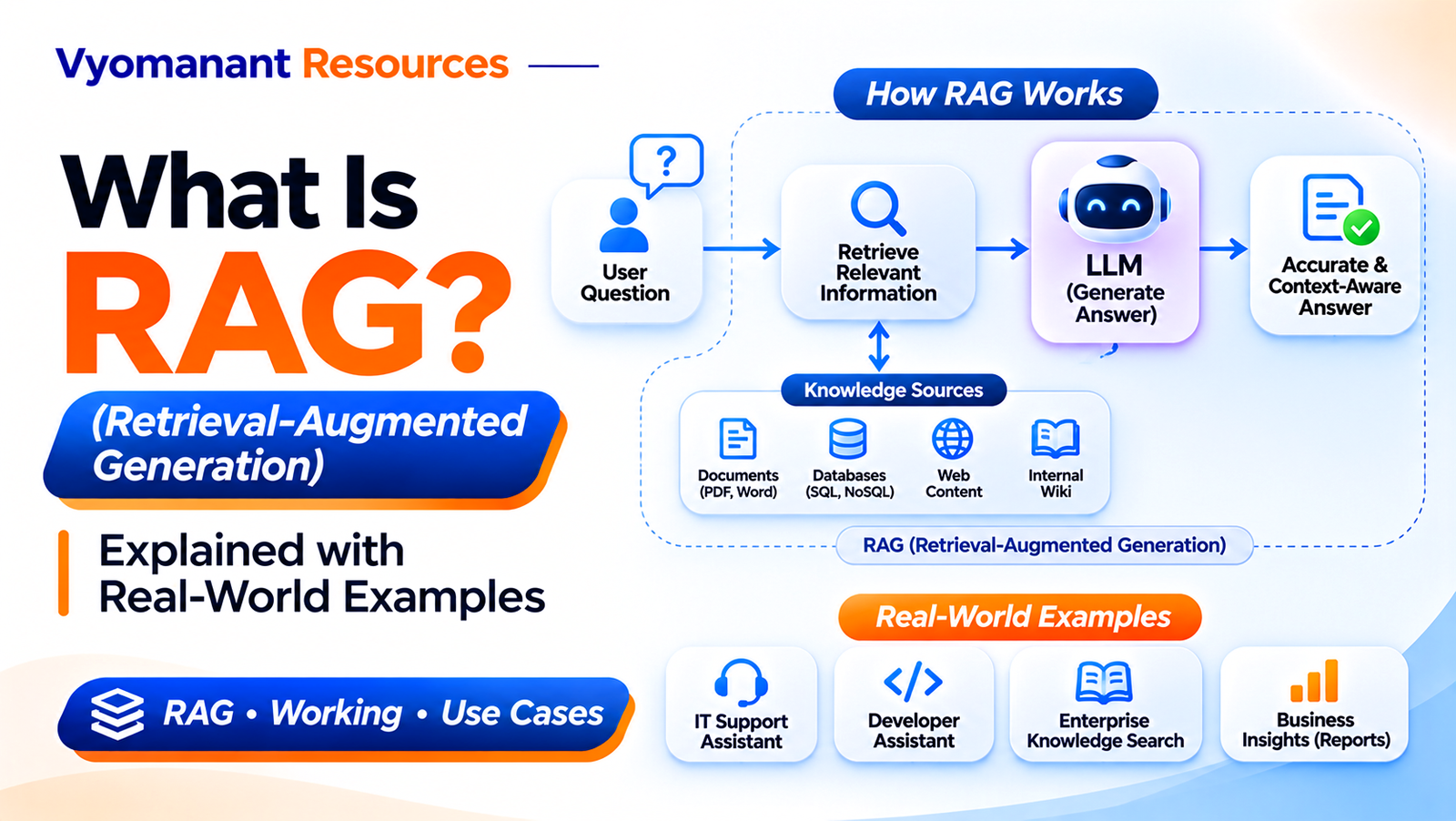
What Is RAG? Explained with Real-World Examples
Learn what Retrieval-Augmented Generation (RAG) is, how it works, and why it is important for AI applications. Understand RAG architecture, embeddings, vector databases, and real-world use cases through simple explanations and practical examples.
Read insight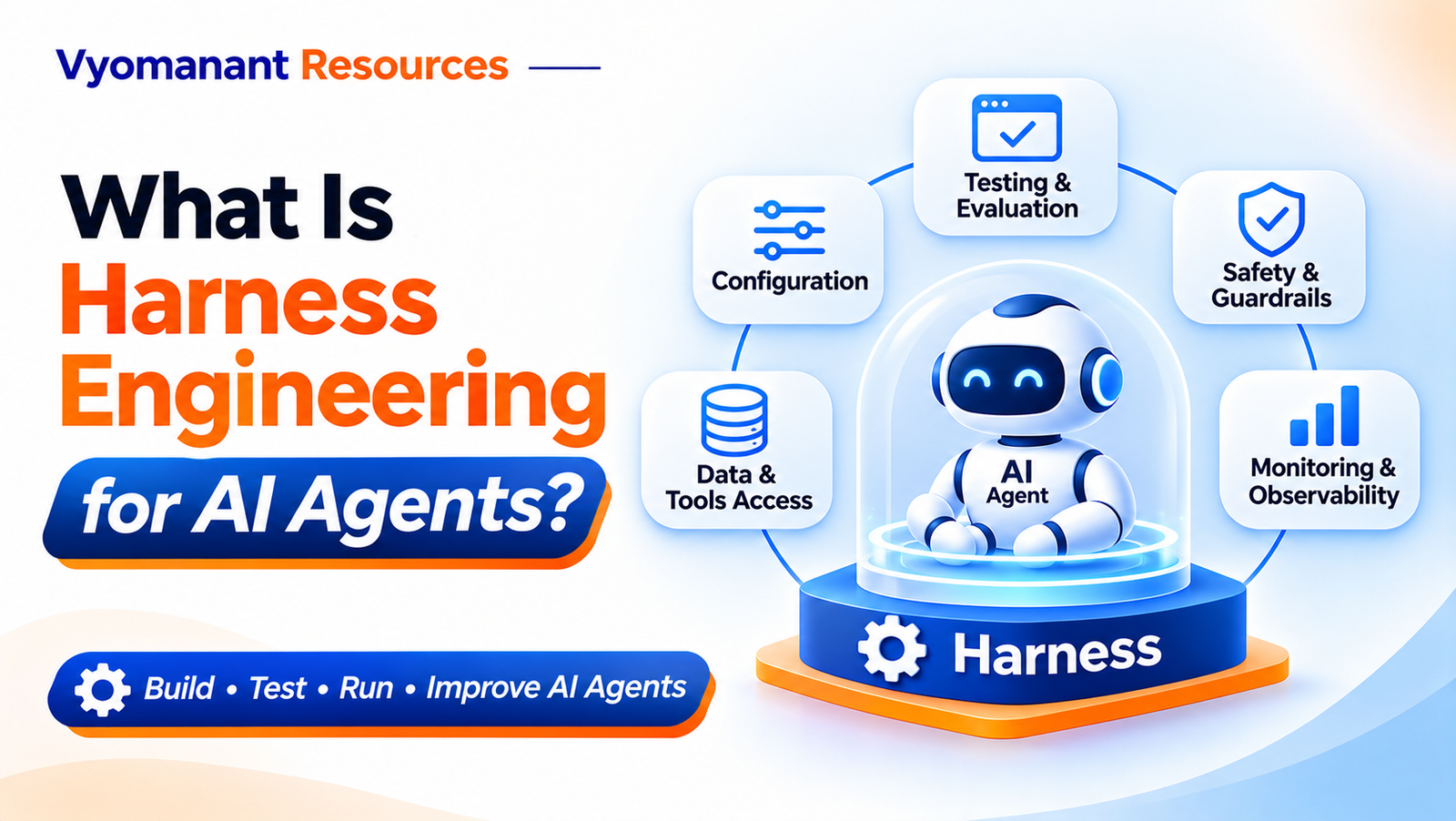
What Is Harness Engineering for AI Agents?
Learn what Harness Engineering is, why AI agents need it, and how it improves reliability, security, and automation. Explore agent harness architecture, key components, and real-world software development examples in simple, beginner-friendly language.
Read insight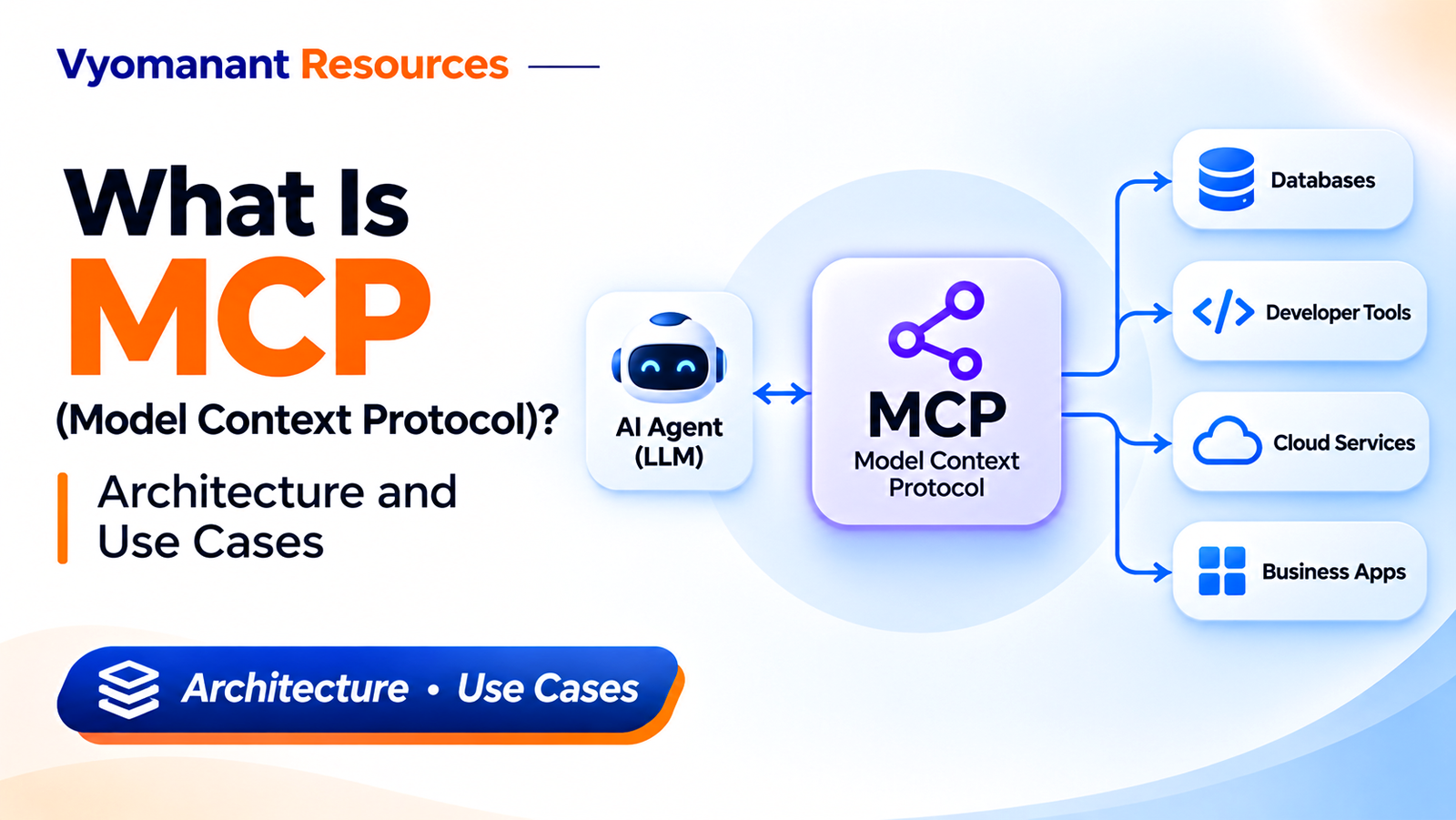
What Is MCP (Model Context Protocol)? Architecture & Use cases
Learn what Model Context Protocol (MCP) is, how its architecture works, and how it connects AI applications with external tools and data. Explore MCP clients, servers, tools, resources, and real-world examples in simple, beginner-friendly language.
Read insight