
INSIGHTS
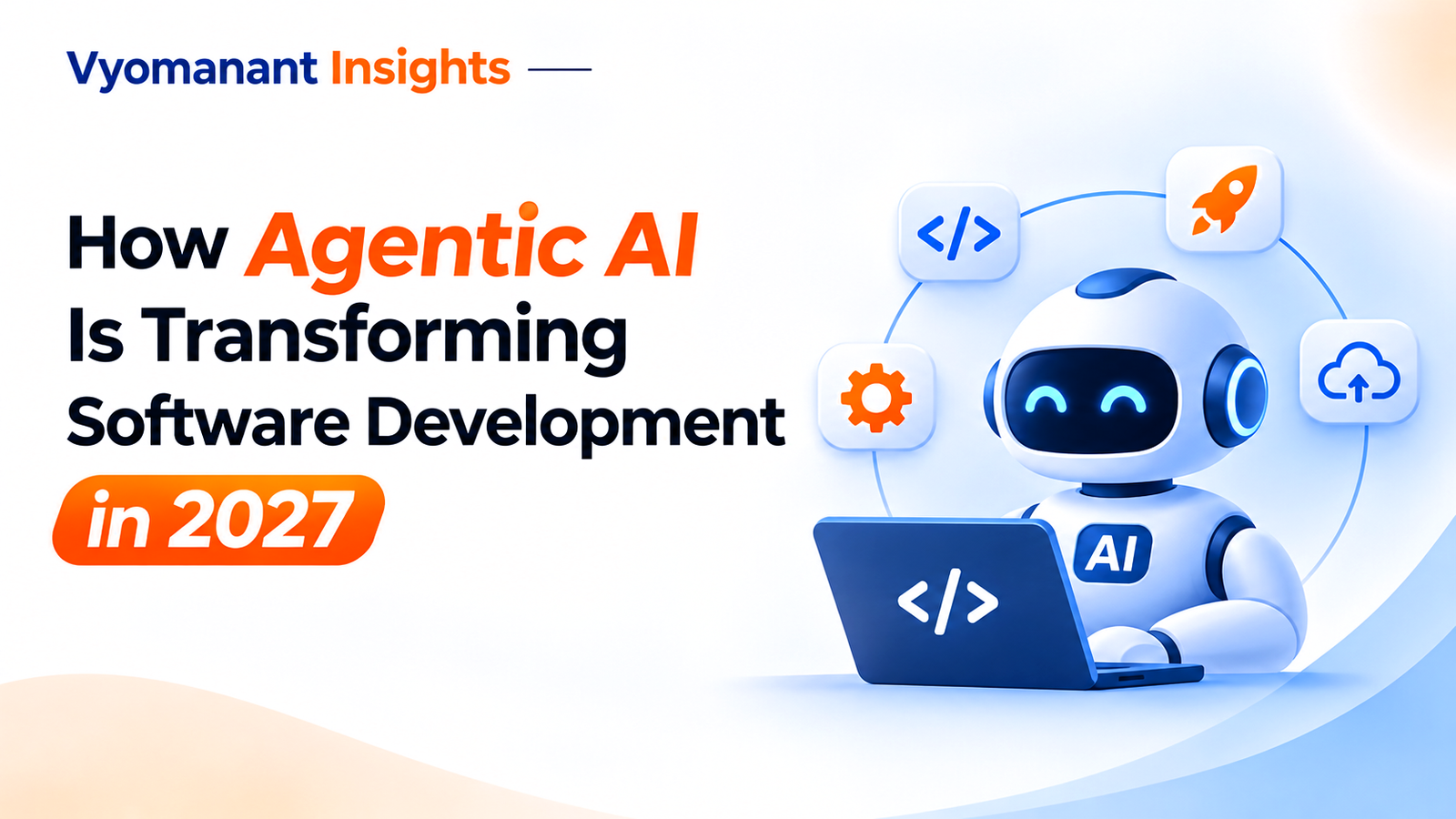
How Agentic AI Is Transforming the Future of Software Development
Discover how Agentic AI is changing software development by helping developers write code, fix bugs, automate testing, and manage DevOps tasks. Learn how it works with simple explanations and real-world examples.
Engineering support
Need help applying this?
Discuss your engineering requirements with Vyomanant Technologies.
Talk to UsOn this page
Imagine having an intelligent assistant that doesn't just tell you how to solve a problem but actually helps you solve it.
That's the idea behind Agentic AI.
Traditional AI tools can answer questions, explain concepts, and suggest code. Agentic AI goes a step further by planning tasks, using tools, and performing actions to achieve a goal.
This technology is changing how developers build, test, deploy, and maintain software.
What Is Agentic AI?
Agentic AI is a type of artificial intelligence that can plan and perform multiple tasks to achieve a specific goal with limited human involvement.
Let's understand this with a simple example.
Imagine you want to build a website.
With a traditional AI assistant, you might ask:
"How do I create a login page?"
The AI explains the steps and generates some code. You then need to implement and test it yourself.
With an AI coding agent, you could say:
"Create a login page with email and password validation."
The agent may:
- Understand your requirement.
- Create the necessary code.
- Add input validation.
- Generate test cases.
- Run tests and identify errors.
- Prepare the changes for your review.
The difference? Traditional AI primarily provides answers, while Agentic AI can also take actions.
Think of it like the difference between a guide who explains directions and an assistant who helps complete the journey.
How Does Agentic AI Work?
Agentic AI generally follows a simple workflow:
Goal → Plan → Action → Check Results → Improve
Let's take an example.
Goal: Fix a failing application.
- Step 1 – Understand: The agent reads the error message.
- Step 2 – Plan: It identifies possible reasons for the failure.
- Step 3 – Act: It examines the code and attempts a fix.
- Step 4 – Verify: It runs tests to check whether the fix works.
- Step 5 – Improve: If the tests fail, it investigates again.
This process allows AI agents to handle multi-step tasks rather than responding to just one question.
Note: An agent can only perform actions supported by its connected tools and permissions. Important changes should still require human approval.
How Is Agentic AI Changing Software Development?
1. Writing Code Faster
Developers spend considerable time writing repetitive code, creating APIs, and implementing common features.
AI agents can help automate some of these activities.
Example:
A developer asks:
"Create a REST API to manage employee records."
An AI agent can help:
- Create API endpoints.
- Write database interaction code.
- Add input validation.
- Generate basic test cases.
Benefit: Developers can focus more on application design and business requirements instead of repetitive coding.
2. Finding and Fixing Bugs
Finding bugs can be time-consuming, especially in large applications.
AI agents can examine error messages, analyze code, and suggest or implement possible fixes.
Example:
A shopping website displays an error when customers try to place an order.
An AI agent may:
- Analyze application logs.
- Identify the code responsible for the error.
- Suggest or apply a fix.
- Run tests to verify the changes.
Benefit: Faster investigation and reduced manual debugging effort.
3. Improving DevOps and CI/CD
DevOps engineers manage application builds, testing, deployments, and infrastructure.
When a CI/CD pipeline fails, engineers usually investigate logs and identify the issue manually.
Example:
A Jenkins pipeline fails because a required software dependency is missing.
An AI agent can:
- Read the pipeline logs.
- Identify the missing dependency.
- Suggest changes to the configuration.
- Prepare a fix for review.
- Rerun the pipeline when authorized.
Benefit: Less repetitive troubleshooting and faster feedback.
4. Automating Software Testing
Testing helps ensure applications work correctly before they reach users.
AI agents can assist by generating test cases, running tests, and analyzing failures.
Example:
A developer creates a registration form.
An AI agent can generate tests to check whether:
- Users can register with valid details.
- Invalid email addresses are rejected.
- Required fields cannot be empty.
- Password validation works correctly.
Benefit: Faster test creation and better opportunities to identify problems early.
5. Simplifying Application Maintenance
Software applications require regular updates, security improvements, and bug fixes.
AI agents can help reduce this maintenance workload.
Example:
An application uses an outdated library.
An AI agent can:
- Identify the outdated dependency.
- Check for compatible versions.
- Update the dependency.
- Run relevant tests.
- Create a pull request for approval.
Benefit: Reduced manual effort and more consistent application maintenance.
Traditional AI vs Agentic AI
| Traditional AI | Agentic AI |
|---|---|
| Primarily answers questions | Can perform actions using tools |
| Suggests code | Can write and test code |
| Explains how to fix errors | Can investigate and attempt fixes |
| Usually responds to individual prompts | Can execute multi-step workflows |
| Relies on users to perform actions | Can automate permitted tasks |
Simple example:
- Traditional AI: "Here is how to fix your Docker build error."
- Agentic AI: "I analyzed your Docker build error, updated the Dockerfile, and tested the build. Please review the changes."
The exact capabilities depend on the AI tool, its configuration, and the permissions it has.
Will Agentic AI Replace Software Developers?
This is one of the biggest questions surrounding AI.
Agentic AI can automate certain development tasks, but software engineering involves much more than writing code.
Developers are still needed to:
- Understand customer and business requirements.
- Design secure and reliable applications.
- Make important architecture decisions.
- Review AI-generated code.
- Solve complex problems.
- Take responsibility for production systems.
Think of Agentic AI as a powerful assistant, not a guaranteed replacement for a developer.
It may change the skills developers need and the way development teams operate.
What Are the Challenges?
Although Agentic AI offers many benefits, it also has limitations.
- Incorrect Code: AI agents can generate code that contains bugs.
- Security Risks: Agents with excessive permissions may make unsafe changes.
- Unexpected Actions: An agent may misunderstand a requirement.
- Human Oversight: Important changes still require review and validation.
For example, an AI agent should not automatically delete a production database simply because it believes doing so will solve an issue.
Organizations need proper access controls, testing, monitoring, and approval processes.
What Does the Future Look Like?
Agentic AI could make software development more automated and collaborative.
Developers may increasingly use AI agents to:
- Build application features.
- Investigate production issues.
- Generate and execute tests.
- Assist with deployments.
- Maintain software applications.
Instead of manually performing every repetitive task, engineers may spend more time designing solutions, solving complex problems, and reviewing automated work.
However, the success of Agentic AI will depend on its accuracy, reliability, security, and responsible adoption.
Final Thoughts
Agentic AI is changing software development from simply asking AI for answers to allowing AI to help complete tasks.
From writing code and fixing bugs to testing applications and assisting DevOps teams, AI agents have the potential to make software development more efficient.
The most important takeaway is simple:
The future of software development is not just about developers using AI to write code. It is about developers and AI agents working together to build better software.
CONTINUE EXPLORING
Recommended next
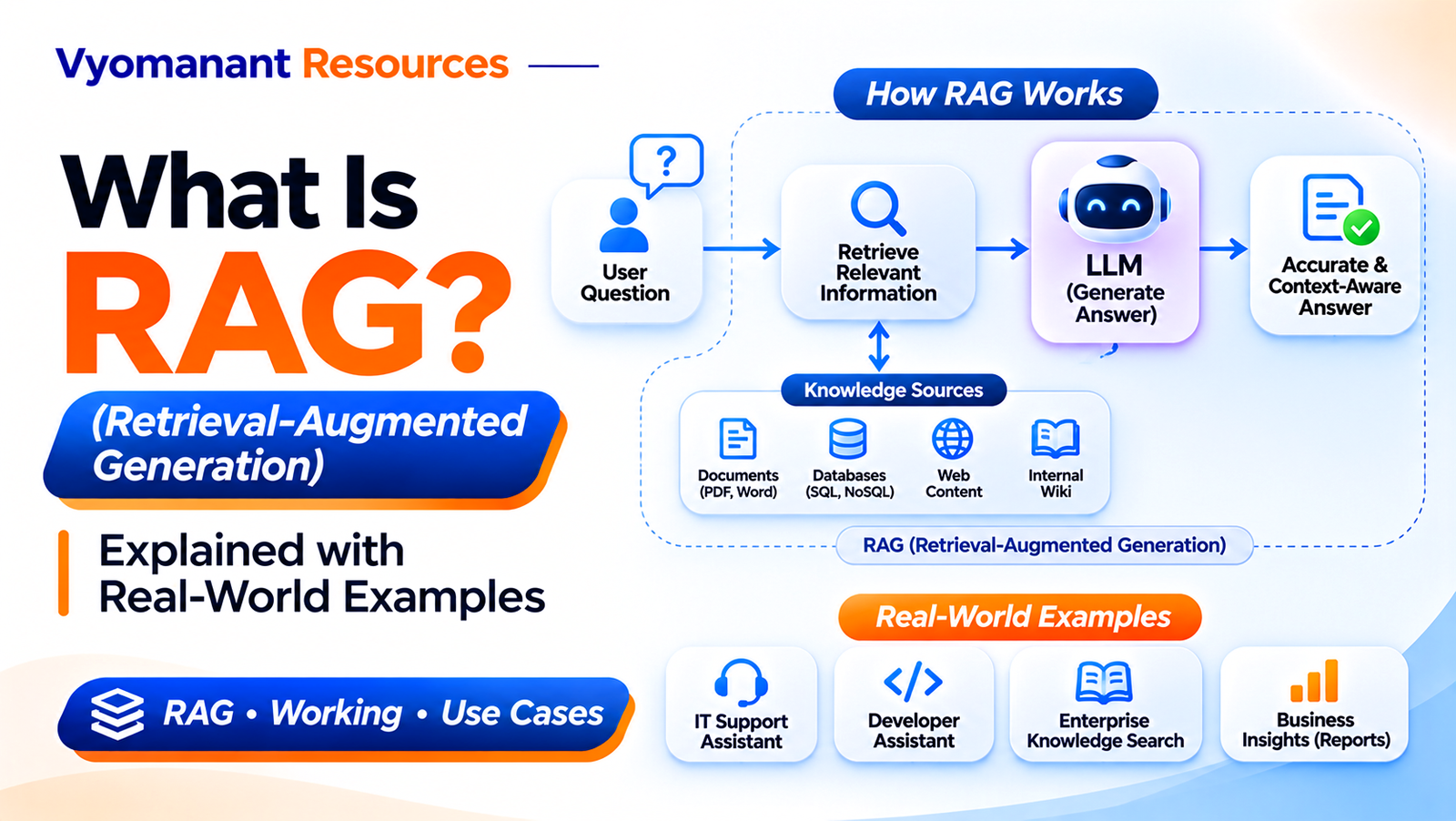
What Is RAG? Explained with Real-World Examples
Learn what Retrieval-Augmented Generation (RAG) is, how it works, and why it is important for AI applications. Understand RAG architecture, embeddings, vector databases, and real-world use cases through simple explanations and practical examples.
Read insight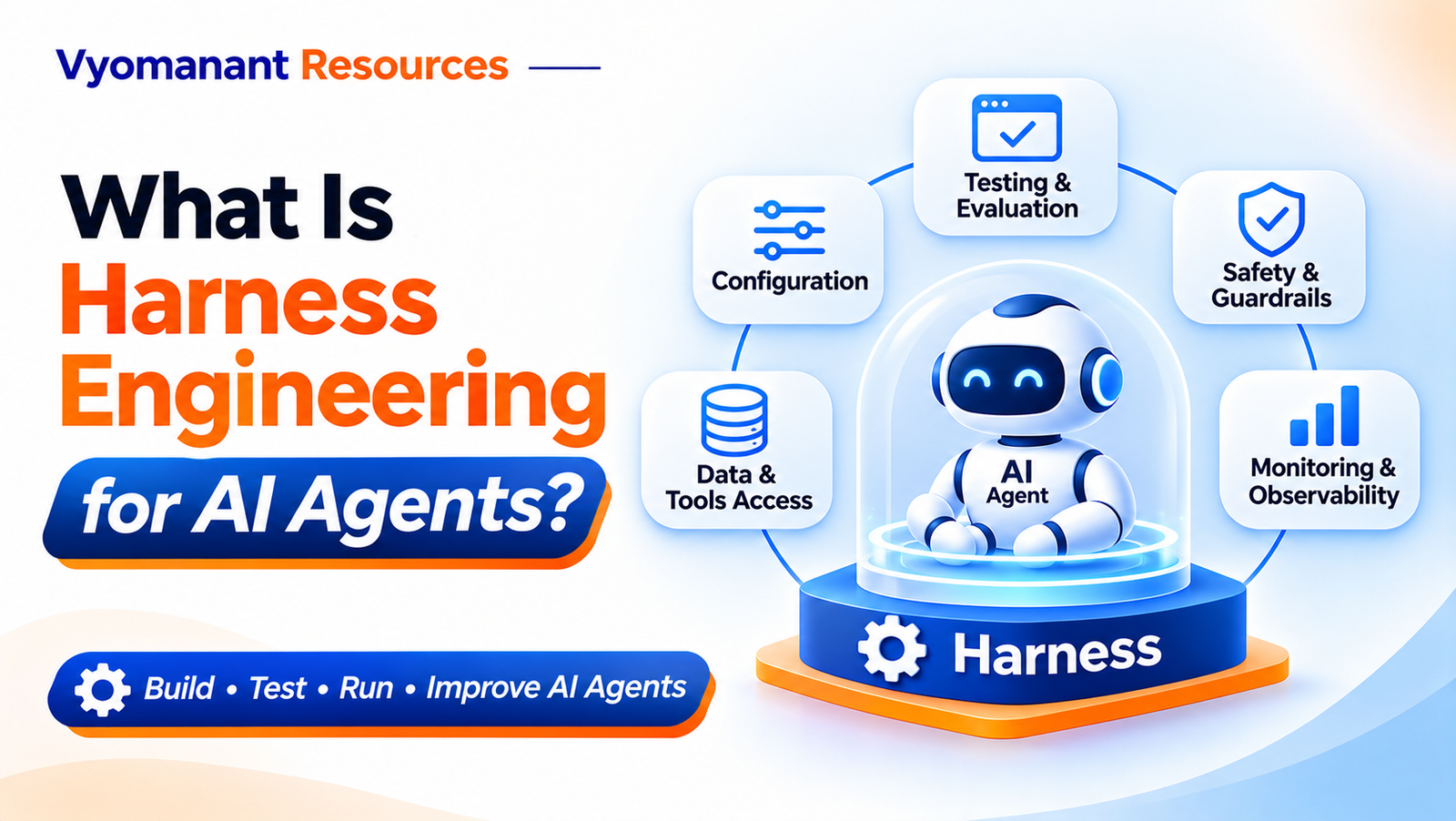
What Is Harness Engineering for AI Agents?
Learn what Harness Engineering is, why AI agents need it, and how it improves reliability, security, and automation. Explore agent harness architecture, key components, and real-world software development examples in simple, beginner-friendly language.
Read insight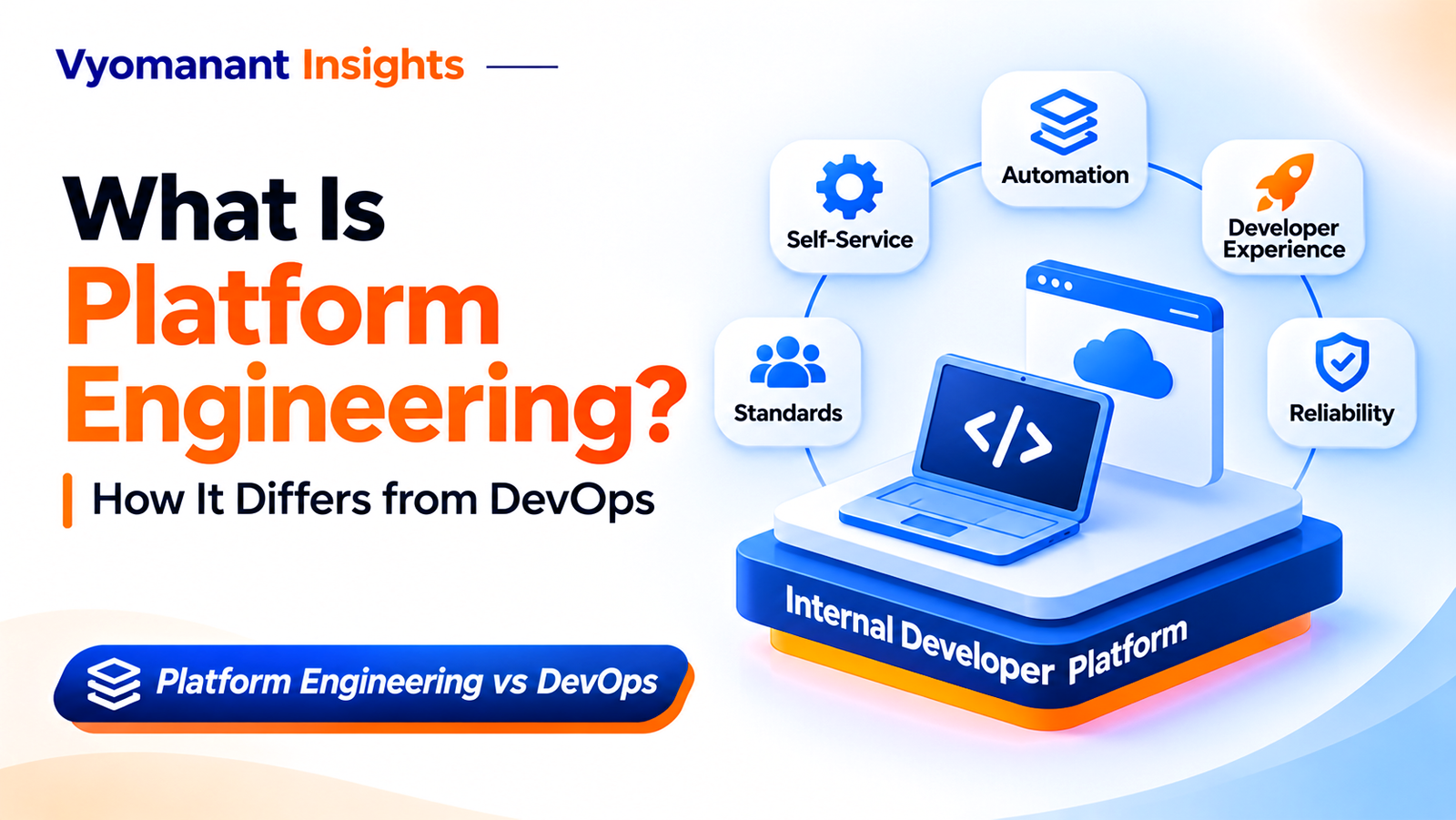
What Is Platform Engineering? How It Differs from DevOps
Learn what Platform Engineering is, how it works, and how it differs from DevOps. Explore Internal Developer Platforms (IDPs), self-service infrastructure, real-world examples, benefits, and the roles of platform engineers.
Read insight