
RESOURCES
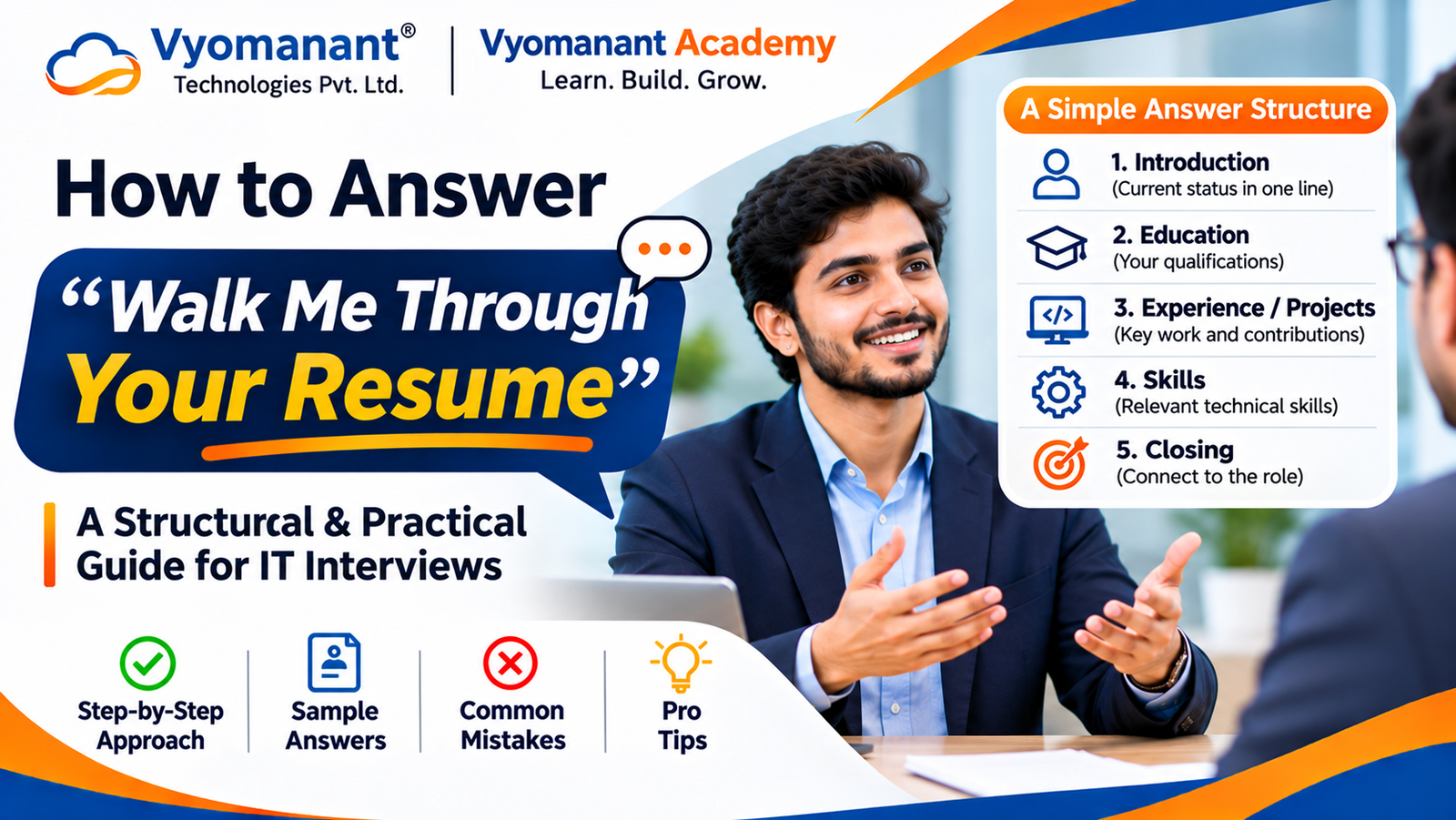
How to Answer "Walk Me Through Your Resume" in IT Interviews
Learn how to confidently walk interviewers through your resume with a simple structure, practical IT examples, career transition tips, and common mistakes to avoid.
Vyomanant Academy
Build these skills hands-on
Explore structured, practical technology programs from Vyomanant Academy.
Explore CoursesOn this page
Introduction
"Walk me through your resume" is a common opening question in HR and technical interviews. It gives you an opportunity to explain your education, professional experience, technical skills, projects, and career progression in a clear and organized way.
Many candidates make the mistake of reading their resume line by line or spending too much time discussing every job responsibility.
However, interviewers are not asking you to repeat your resume. They want to understand how your professional journey has prepared you for the position.
Whether you are an IT fresher, DevOps Engineer, Cloud Engineer, Software Developer, or career changer, a structured explanation can help you create a strong first impression.
In this guide, you will learn how to present your resume confidently using practical examples and a simple interview-ready framework.
Why Do Interviewers Ask "Walk Me Through Your Resume"?
Interviewers use this question to understand your professional journey and evaluate how your background matches the job requirements.
They mainly assess:
- Career Progression: How your education and experience have developed over time.
- Technical Skills: Which technologies you have learned and applied.
- Practical Experience: What projects and responsibilities you have handled.
- Career Decisions: Why you moved between roles or technologies.
- Job Relevance: How your background prepares you for the current opportunity.
- Communication: How clearly you organize and explain information.
What Is the Interviewer Really Looking For?
Imagine you are applying for a DevOps Engineer position.
Your resume mentions:
- Bachelor's degree in Computer Science.
- Experience in Linux administration.
- Knowledge of AWS, Git, Jenkins, and Docker.
- A CI/CD automation project.
- Interest in cloud infrastructure and DevOps.
The interviewer wants to understand how these experiences connect and why they make you suitable for the DevOps role.
Key Point: Your answer should explain your professional journey and relevant achievements, not simply repeat the information already written on your resume.
"Tell Me About Yourself" vs "Walk Me Through Your Resume"
Although these questions are similar, they have slightly different purposes.
| Tell Me About Yourself | Walk Me Through Your Resume |
|---|---|
| Focuses on your professional introduction | Focuses on your career journey |
| Usually begins with your current status | Often follows education-to-present chronology |
| Highlights your strongest qualifications | Explains how your experience developed |
| Generally takes 60–90 seconds | Generally takes 2–3 minutes |
| Provides a professional summary | Connects resume sections into a story |
Simple Example
Tell Me About Yourself:
"I am a DevOps Engineer with three years of experience in Linux, AWS, Jenkins, and Docker. My primary responsibilities include CI/CD automation and application deployments."
Walk Me Through Your Resume:
"I completed my degree in Computer Science and started my career in Linux administration. During that role, I developed an interest in automation and cloud technologies. I later moved into DevOps engineering, where I began working with Jenkins, Docker, and AWS-based deployment workflows."
Remember: The first answer summarizes your professional identity. The second explains how you reached your current position.
The Best Five-Step Framework to Explain Your Resume
Use this simple structure:
Education → Career Beginning → Professional Growth → Key Achievements → Career Goal
For freshers, replace professional experience with training, internships, and academic projects.
Step 1: Education — Where Did You Start?
Briefly introduce your educational background.
Example for Freshers:
"I completed my bachelor's degree in Computer Science, where I developed an interest in Linux, cloud computing, and software technologies."
Example for Experienced Professionals:
"I completed my graduation in Computer Science and began my IT career in system administration."
Tip: Experienced candidates should keep education brief unless it is particularly relevant to the position.
Step 2: Career Beginning — How Did You Enter IT?
Explain your first relevant professional role or technical learning experience.
Example:
"I started my career as a Linux Support Engineer, where I worked on server monitoring, user management, service troubleshooting, and basic shell scripting."
For freshers, mention relevant internships or hands-on training.
Key Point: Focus on experiences that help explain your professional development.
Step 3: Professional Growth — How Did Your Responsibilities Develop?
Describe how you gained new skills or moved into more advanced responsibilities.
Example:
"After gaining experience in Linux administration, I started learning AWS, Git, Jenkins, and Docker. This helped me transition toward CI/CD automation and cloud-based application deployments."
This demonstrates a logical progression rather than an unrelated list of technologies.
Step 4: Key Achievements — What Have You Contributed?
Highlight one or two meaningful projects, responsibilities, or accomplishments.
Example:
"In my recent project, I helped maintain a Jenkins CI/CD pipeline that automated application builds and Docker image creation. This reduced repetitive manual activities and improved build consistency."
If you have verified results, mention them briefly.
Pro Tip: Focus on your individual contribution, not just what the overall team delivered.
Step 5: Career Goal — Why Are You Applying?
End by connecting your experience to the position.
Example:
"With my background in Linux administration, AWS, and DevOps automation, I am now looking for an opportunity to contribute to larger cloud and automation projects while developing my technical expertise."
A strong closing helps the interviewer understand why this opportunity is the next logical step in your career.
Understand It Through a Simple Real-Life Analogy
Your Resume Is a Map of Your Professional Journey
Imagine explaining a journey to someone.
You would describe:
- Starting Point: Where you began.
- Important Stops: Experiences and skills gained along the way.
- Major Milestones: Important achievements or challenges.
- Current Position: Where you are today.
- Destination: Where you want to go next.
Your resume follows a similar pattern.
For example:
Computer Science Graduate → Linux Support Engineer → DevOps Engineer → Cloud & Automation Specialist
Each stage explains how your skills and responsibilities developed.
The Lesson: Do not explain every small detail from your resume. Focus on the important milestones that connect your past experience to your future career goals.
Best Sample Answers for IT Interviews
The following examples demonstrate how to explain different career backgrounds professionally.
Important: These are illustrative answers. Replace the qualifications, companies, experience, technologies, and achievements with your genuine information.
Example 1: Walk Me Through Your Resume — IT Fresher
Target Role: Junior Cloud or DevOps Engineer
Sample Answer:
"Certainly. I recently completed my bachelor's degree in Computer Science.
During my studies, I developed an interest in Cloud Computing, Linux, and DevOps technologies.
To build practical knowledge, I completed hands-on training in Linux, AWS, Git, Docker, and Jenkins.
One of my important projects involved containerizing a web application using Docker and creating a basic Jenkins CI/CD pipeline to automate the application build process.
Through this project, I gained practical understanding of version control, containerization, and deployment automation.
Along with technical skills, I have been improving my problem-solving and communication abilities through project practice and technical discussions.
I am now looking for an opportunity to begin my career as a Cloud or DevOps Engineer, contribute to real-world projects, and continue learning."
Why This Answer Works
- Explains education and technical interests.
- Highlights practical learning.
- Demonstrates project experience.
- Connects technical preparation with career goals.
Pro Tip for Freshers: Focus on education, internships, certifications, practical projects, and relevant skills rather than emphasizing your lack of professional experience.
Example 2: Walk Me Through Your Resume — Experienced DevOps Engineer
Target Role: DevOps Engineer
Sample Answer:
"Certainly. I completed my graduation in Computer Science and started my IT career as a Linux Support Engineer.
In my initial role, I worked on Linux server monitoring, troubleshooting, user management, and application support.
This experience helped me build a strong foundation in operating systems, infrastructure, and technical problem-solving.
As I gained experience, I developed an interest in automation and cloud technologies and transitioned into DevOps engineering.
In my current role, I work with AWS, Git, Jenkins, Docker, and Linux, primarily supporting CI/CD automation and application deployments.
My responsibilities include maintaining Jenkins pipelines, supporting Docker image builds, troubleshooting deployment failures, and collaborating with development teams.
One of my key contributions was helping automate repetitive deployment activities, improving the consistency of our release process.
I am now looking for an opportunity to take on more advanced responsibilities in cloud infrastructure, DevOps automation, and scalable application delivery."
Why This Answer Works
- Demonstrates logical career progression.
- Connects Linux experience to DevOps.
- Highlights technical responsibilities.
- Includes a meaningful contribution.
- Explains future career direction.
Pro Tip for Experienced Candidates: Spend more time on your recent responsibilities and achievements than on your earliest career experiences.
Example 3: Walk Me Through Your Resume — AWS Cloud Engineer
Target Role: AWS Cloud Engineer
Sample Answer:
"I completed my graduation in Computer Science and began developing my technical skills in Linux administration and computer networking.
I later expanded my knowledge into AWS Cloud Computing, focusing on infrastructure provisioning, cloud networking, and monitoring.
I gained practical experience with Amazon EC2, VPC, IAM, S3, and CloudWatch.
In one of my projects, I worked on deploying a web application using EC2 instances, security groups, and an Application Load Balancer.
My responsibilities included configuring cloud resources, reviewing access controls, monitoring infrastructure health, and troubleshooting connectivity issues.
This experience strengthened my understanding of cloud infrastructure, networking, security, and operational reliability.
I am now interested in a role where I can contribute to secure and scalable AWS infrastructure while continuing to improve my cloud engineering skills."
Why This Answer Works
It demonstrates a clear transition from foundational IT skills to practical cloud engineering knowledge.
Example 4: Walk Me Through Your Resume — Career Transition to DevOps
Target Role: IT Support to DevOps Engineer
Sample Answer:
"I started my professional career in IT Support, where I gained experience troubleshooting operating systems, resolving technical issues, and supporting users.
Through this experience, I developed a strong interest in Linux administration, infrastructure automation, and cloud technologies.
To prepare for a career transition, I began learning AWS, Git, Jenkins, Docker, and Terraform through structured training and hands-on projects.
One of my practical projects involved containerizing a web application using Docker and configuring a Jenkins CI/CD pipeline.
This helped me understand automated builds, application packaging, and deployment workflows.
I believe my previous troubleshooting experience, combined with my growing DevOps knowledge, provides a useful foundation for this transition.
I am now looking for an opportunity to move into a DevOps Engineer role, apply my existing skills, and continue developing practical automation experience."
Why This Answer Works
- Connects previous experience with the target role.
- Explains the reason for the career change.
- Demonstrates technical preparation.
- Highlights transferable troubleshooting skills.
How to Explain Employment Gaps or Career Changes
Interviewers may notice employment gaps, career transitions, or changes in job responsibilities.
The best approach is to remain honest, concise, and focused on relevant progress.
Example 1: Employment Gap for Skill Development
"During that period, I focused on developing my cloud and DevOps skills. I completed practical training in Linux, AWS, Docker, and Jenkins and worked on hands-on projects to strengthen my technical knowledge."
Use this answer only if it accurately reflects how you spent that time.
Example 2: Transition from IT Support to DevOps
"My IT Support experience helped me develop strong troubleshooting skills. I became interested in automation and cloud infrastructure, so I started learning DevOps tools and working on practical projects to prepare for the transition."
Example 3: Short Employment Gap for Personal Reasons
"I took a career break for personal reasons, which have now been addressed. I am ready to return to work and focus on contributing to the responsibilities of this position."
You generally do not need to disclose unnecessary private details.
Key Point: Explain the situation truthfully, avoid defensive language, and connect your answer to your current readiness for the role.
How Long Should Your Resume Explanation Be?
For most IT interviews, aim for approximately 2–3 minutes, depending on your experience.
| Section | Suggested Time |
|---|---|
| Education and Background | 15–25 seconds |
| Career Beginning | 20–30 seconds |
| Professional Growth | 30–45 seconds |
| Projects and Achievements | 40–60 seconds |
| Career Goal | 15–20 seconds |
These timings are flexible. Freshers may need less time, while experienced professionals may have more relevant milestones to discuss.
Pro Tip: Give a structured overview first. Allow the interviewer to ask follow-up questions about specific projects or responsibilities.
Common Mistakes to Avoid
| Common Mistake | Better Approach |
|---|---|
| Reading the resume line by line | Explain the important career milestones |
| Discussing every small responsibility | Highlight relevant experiences |
| Spending too long on education | Prioritize recent work and projects |
| Listing technologies without examples | Explain where and how you used them |
| Giving unclear career transition reasons | Connect the transition to your goals |
| Exaggerating responsibilities | Describe genuine contributions |
| Speaking without a clear sequence | Follow a logical career timeline |
Weak Answer vs Strong Answer
Weak Answer:
"I completed my degree, joined a company, worked on Linux, learned AWS, used Jenkins and Docker, and now I am looking for a better opportunity."
Strong Answer:
"I started my career in Linux administration, where I developed strong troubleshooting and infrastructure skills. I later expanded into AWS and DevOps automation, working with Jenkins and Docker to support application deployments. I am now looking to apply this combined experience in a more advanced DevOps role."
Why Is the Second Answer Better?
It demonstrates career progression, relevant skills, practical experience, and a clear professional goal.
How to Handle Multiple Jobs on Your Resume
If you have worked for several organizations, avoid explaining every job in equal detail.
Instead, prioritize relevance and recent experience.
Example Career Timeline
Company A — Linux Support Engineer
"I began my career supporting Linux servers, monitoring system health, and troubleshooting infrastructure issues."
Company B — DevOps Engineer
"I moved into a DevOps role where I gained experience with Jenkins, Docker, Git, and AWS-based deployments."
Current Role — Cloud & DevOps Engineer
"I now focus on CI/CD automation, cloud infrastructure, deployment troubleshooting, and operational improvements."
How to Connect These Roles
"Each role helped me build on my previous experience, moving from infrastructure support to automation and cloud engineering."
Remember: A good career explanation demonstrates how your responsibilities developed, even if your job titles changed.
Important Follow-Up Questions to Prepare
After explaining your resume, interviewers may ask questions about your experience.
1. Why Did You Change Your Previous Job?
Focus on genuine professional reasons such as career growth, learning opportunities, or changing responsibilities.
Example:
"I was looking for an opportunity to expand my experience in cloud infrastructure and DevOps automation."
2. What Was Your Most Important Project?
Briefly explain the project objective, technologies, your responsibilities, and the outcome.
3. Why Did You Move from Support to DevOps?
Explain how your previous technical experience motivated you to explore automation, cloud infrastructure, and software delivery.
4. What Is Your Strongest Technical Skill?
Choose a skill relevant to the position and support it with a practical example.
Example:
"One of my strongest skills is troubleshooting CI/CD pipeline failures, including reviewing Jenkins logs and investigating configuration issues."
5. How Does Your Previous Experience Match This Role?
Connect your most relevant responsibilities directly to the job requirements.
Example:
"My experience with Linux, AWS, Jenkins, and Docker aligns with the infrastructure and deployment automation responsibilities of this position."
How to Prepare Before Your Interview
Follow this practical preparation checklist.
1. Review Your Resume Carefully
Understand every project, technology, responsibility, and achievement mentioned.
2. Identify Your Career Milestones
Select the important stages that demonstrate your professional growth.
3. Prepare a Logical Timeline
Connect your education, first role, technical development, current experience, and future goals.
4. Highlight Relevant Achievements
Prepare one or two examples demonstrating your technical contributions.
5. Review Career Changes and Gaps
Be ready to explain transitions or gaps honestly and professionally.
6. Match Your Experience to the Job
Prioritize skills and projects that are relevant to the target position.
7. Practice Speaking Naturally
Practice your explanation aloud and review your clarity, confidence, sequence, and speaking time.
Interview Preparation Tip: Do not memorize your resume explanation word for word. Remember the career timeline and key achievements so you can speak naturally.
Frequently Asked Questions
1. Should I Explain My Resume from the Beginning?
Usually, yes. A chronological explanation is helpful for this question, but experienced candidates can summarize early roles and focus more on recent experience.
2. Should I Mention Every Company?
Mention relevant organizations and explain the important responsibilities or transitions. Avoid unnecessary details about minor tasks.
3. Can Freshers Answer This Question Without Work Experience?
Yes. Freshers can explain their education, internships, technical training, academic projects, and career interests.
4. Should I Explain Employment Gaps?
Be prepared to explain gaps if asked. Keep the explanation truthful, concise, and professional.
5. Is It Necessary to Mention Personal Information?
Generally, no. Focus on professional background, technical skills, achievements, and career goals.
Key Takeaways
- Use the Education → Career Beginning → Professional Growth → Key Achievements → Career Goal framework.
- Explain your professional journey, rather than reading your resume line by line.
- Focus on relevant technical skills, projects, and individual contributions.
- Connect career transitions logically and explain gaps honestly when necessary.
- Keep your initial answer structured, professional, and approximately 2–3 minutes.
- Prepare for follow-up questions about projects, responsibilities, career changes, and technical experience.
Final Reminder: A strong answer to "Walk me through your resume" tells a clear professional story that connects where you started, what you learned, what you achieved, and why you are ready for the next opportunity.
What Should You Learn Next?
Continue improving your IT interview preparation:
- How to Answer "Why Did You Leave Your Previous Job?"
- How to Explain Employment Gaps in IT Interviews
- How to Answer "Where Do You See Yourself in Five Years?"
Continue Learning with Vyomanant Academy
Your resume highlights your qualifications, but your ability to explain your experience confidently helps interviewers understand your professional value.
Vyomanant Academy provides practical, industry-focused learning in Cloud Computing, DevOps, Linux, Docker, Kubernetes, Infrastructure Automation, and AI technologies.
Build relevant technical skills, strengthen your project knowledge, and prepare for modern IT engineering opportunities.
Learn. Build. Grow.
Explore Programs: https://academy.vyomanant.com/
CONTINUE EXPLORING
Recommended next

What Is Artificial Intelligence? A Simple Beginner's Guide
Learn what Artificial Intelligence (AI) means, how it works, and where we use it in everyday life, with simple examples that anyone can understand.
View resource
What Is Machine Learning? A Simple Beginner's Guide
Discover what Machine Learning is, how computers learn from data, and how predictions work. Explore key ML concepts, learning types, and real-world examples in this beginner-friendly guide.
View resource
What Is Information Technology? A Beginner's Guide
Discover what Information Technology (IT) is, how it works, its main components, everyday applications, and how beginners can start learning IT.
View resource